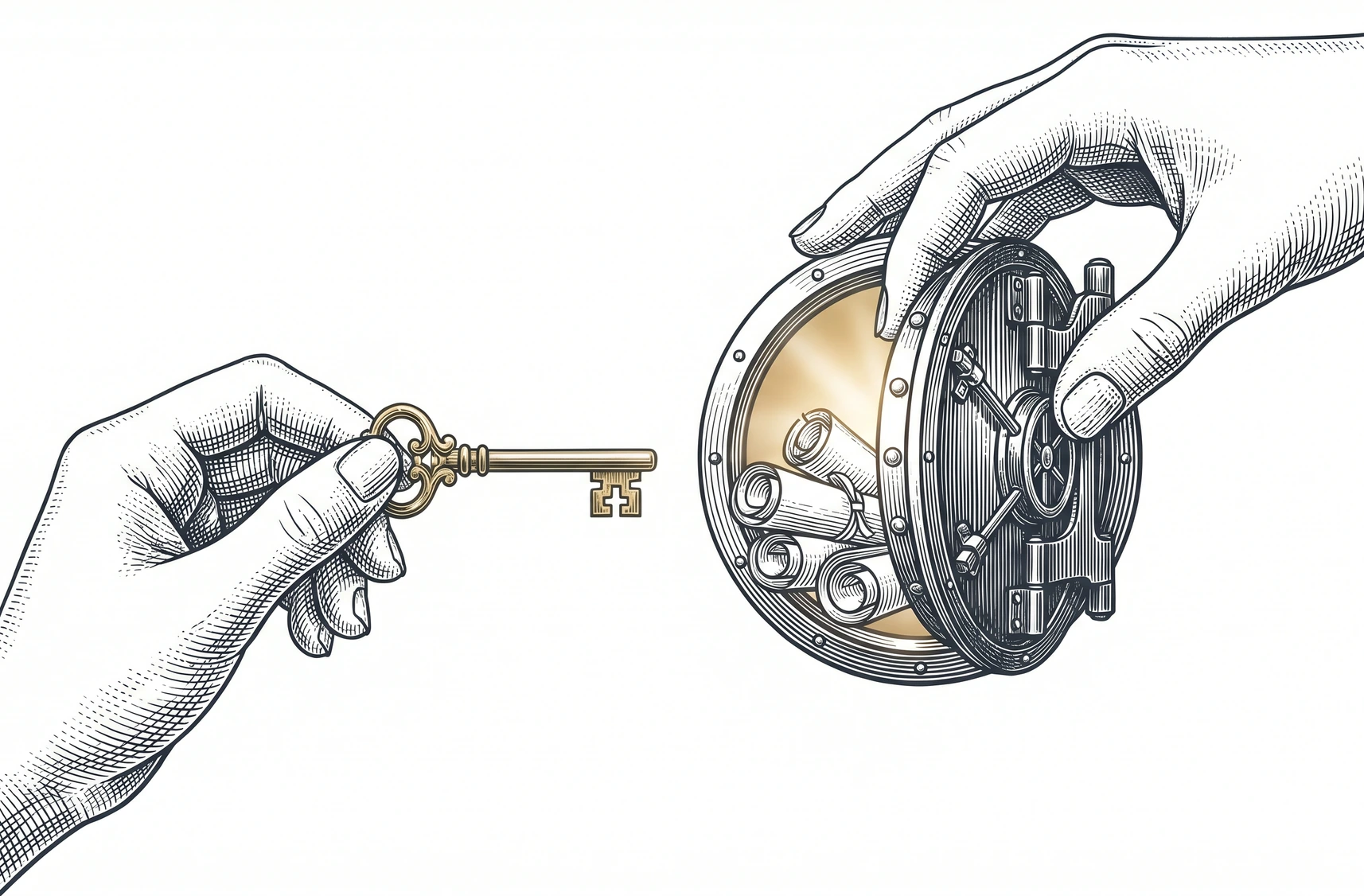
Why standard exit interviews fail to capture what matters
The traditional exit interview was designed for a different problem. It exists to surface culture issues, manager feedback, and reasons for departure, all useful, none of them addressing the knowledge gap.
Asking a departing executive 'what should we know?' produces a predictable answer: a list of active projects, a handful of relationship handoffs, and a polite summary of the role. What it does not produce is the deeper layer, the patterns the executive learned to recognize, the decisions they would do differently in hindsight, and the unwritten rules that govern how the role actually works.
Capturing that layer requires a different kind of conversation, structured around the categories of knowledge that matter most and conducted before a departure is imminent, not as an afterthought after notice has been given.
The five categories of executive knowledge worth capturing
Decision history. What were the three or four most consequential decisions made in this role over the past few years? What were the alternatives considered? What information was decisive? What, in retrospect, would the executive do differently?
Relationship architecture. Who are the external stakeholders, customers, suppliers, partners, regulators, whose relationships materially depend on this individual? What is the history of each relationship? What dynamics, sensitivities, or commitments are not written down anywhere?
Failed initiatives. What has been tried and not worked? Why? What was the underlying lesson? Failed initiatives are some of the most valuable knowledge in an organization and almost never appear in any formal documentation.
Operational instincts. What signals does this executive watch for that others might miss? Which leading indicators have proven reliable? Which internal dynamics tend to predict problems before the problems become visible?
Forward bets. What does the executive believe about the future of the business, the market, the function, that may not yet be consensus? Where are they positioning resources, attention, or relationships in anticipation of conditions that have not yet arrived?
Conducting the interviews: format and cadence
The interviews should be conversational, not interrogative. Sixty to ninety minutes per session, ideally spread across two or three sessions rather than compressed into one. The goal is depth, not coverage, so the interviewer should be willing to follow threads and ask follow-up questions even when they take the conversation off the prepared list.
Recording the conversations, with consent, is essential. Most of the value is in the texture of the answers, not in a summary, and a recording allows that texture to be preserved, transcribed, and referenced by future leaders in the role.
The cadence matters. These conversations should not be scheduled in the final two weeks before departure. They should be part of an ongoing leadership practice, conducted with senior executives at least annually, well before any specific departure is on the horizon.
Who should conduct the interviews
The instinct in many organizations is to assign these interviews to HR or to the incoming successor. Both are reasonable, neither is optimal.
HR-led interviews tend to produce sanitized answers because the executive understands the audience and adjusts accordingly. Successor-led interviews are more useful but tend to focus on operational handoff rather than strategic context.
The best results come from interviews conducted by a third party with strategic context but no operational stake, an internal strategy lead, a senior advisor, or an external partner whose only job in the conversation is to capture knowledge accurately and completely. Removing the operational dynamic frees the departing executive to speak more candidly about what worked, what did not, and what they wish they had known earlier.
Turning interviews into organizational memory
Captured knowledge is only useful if it is accessible. The output of these interviews should not sit in a folder no one opens. It should be structured, indexed, and integrated into the briefing materials provided to future leaders in the role.
A practical approach is to maintain a living document for each senior role: a 'role institutional memory' that includes the decision history, relationship architecture, and operational instincts described above, updated annually with each new round of interviews. When a transition occurs, the incoming leader inherits not just a job description and a calendar but a structured account of the role's accumulated knowledge.
Done consistently, this practice converts what is currently a personal asset, knowledge living in an individual's head, into an organizational asset that compounds over time rather than resetting with each departure.